

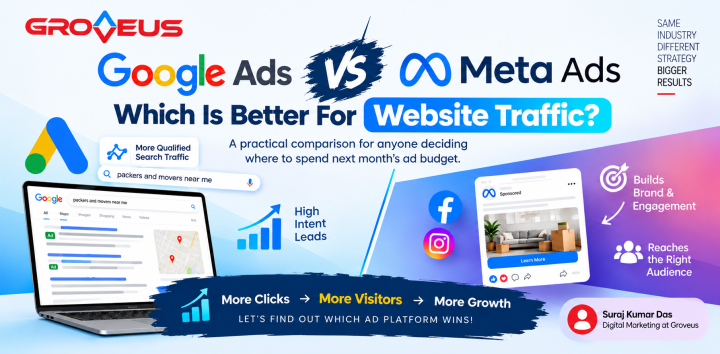
Google Ads vs Meta Ads in 2026: compare search intent, audience targeting, lead quality, traffic, and conversion strategies to plan your ad budget.
A practical comparison for anyone deciding where to spend next month’s ad budget.
Ask ten different agency owners this and you’ll get ten different answers. It’s not that nobody knows, it’s that the real answer changes depending on what your customer happens to be doing right when your ad shows up.
Google catches decisions already made
Google shows up at the moment someone has already decided something needs to happen. Type “packers and movers near me” into search, and you’re not browsing, you’ve got a move next week and a company to hire. Same story with a real estate agent targeting “2BHK for sale in Whitefield.” That buyer has already scrolled through a dozen listings; they’re close to calling.
Legal is where this shows up most clearly. Nobody types “divorce lawyer in Delhi” out of idle curiosity. That search only happens because something in life just went sideways.
Meta creates demand that wasn’t there
Meta plays an entirely different game. Nobody opens Instagram mid-scroll thinking about lawyers, apartments, or moving trucks. There’s no question being answered there, you’re introducing one that didn’t exist a moment ago. A builder posting drone footage over a new project. A movers company running a “book now, save later” reel. That’s Meta doing what it does well.
Getting someone to click? Cheap and easy. Getting that same person to actually become a customer that’s a completely different challenge.
Where the two really split: targeting
A developer with months of site-visit data can feed Meta a lookalike audience that genuinely performs. Law firms rarely have anything close to that kind of list, so Meta has far less raw material to work from. Google sidesteps that problem entirely, it just matches whoever is searching to whatever they typed, no history required, which is exactly why it holds up reasonably well across movers, real estate, and legal alike.
So which platform actually wins?
Splits are starting points for testing, not fixed rules, adjust them from your own conversion data.
The part everyone overlooks
None of this matters if the landing page loads slowly or the contact form breaks on a phone. Someone moving in three days, a buyer weighing three builders, a person racing a legal deadline, none of them are sticking around for a page that takes forever to load.
What to do next month
Run small, parallel tests on both platforms instead of committing the full budget to one.
Track what turns into real conversations calls, qualified enquiries, site visits not clicks or CPC.
Fix page speed and mobile forms before increasing spend; ad money leaks fastest here.
Shift next month’s budget toward whichever platform produced cheaper qualified leads, not cheaper traffic.
The short version
High-intent, urgent services: Google first, almost always.
Considered, aspirational purchases: Meta to create interest, Google to close it.
Weak first-party data: lean Google Meta needs audience material to work with.
Measure conversations, not clicks: anything else is guesswork wearing a strategy costume.
Comments 0